Improving First-Time Experience at Scale
Overview
Paperpal users were coming with very different goals.
Some wanted to
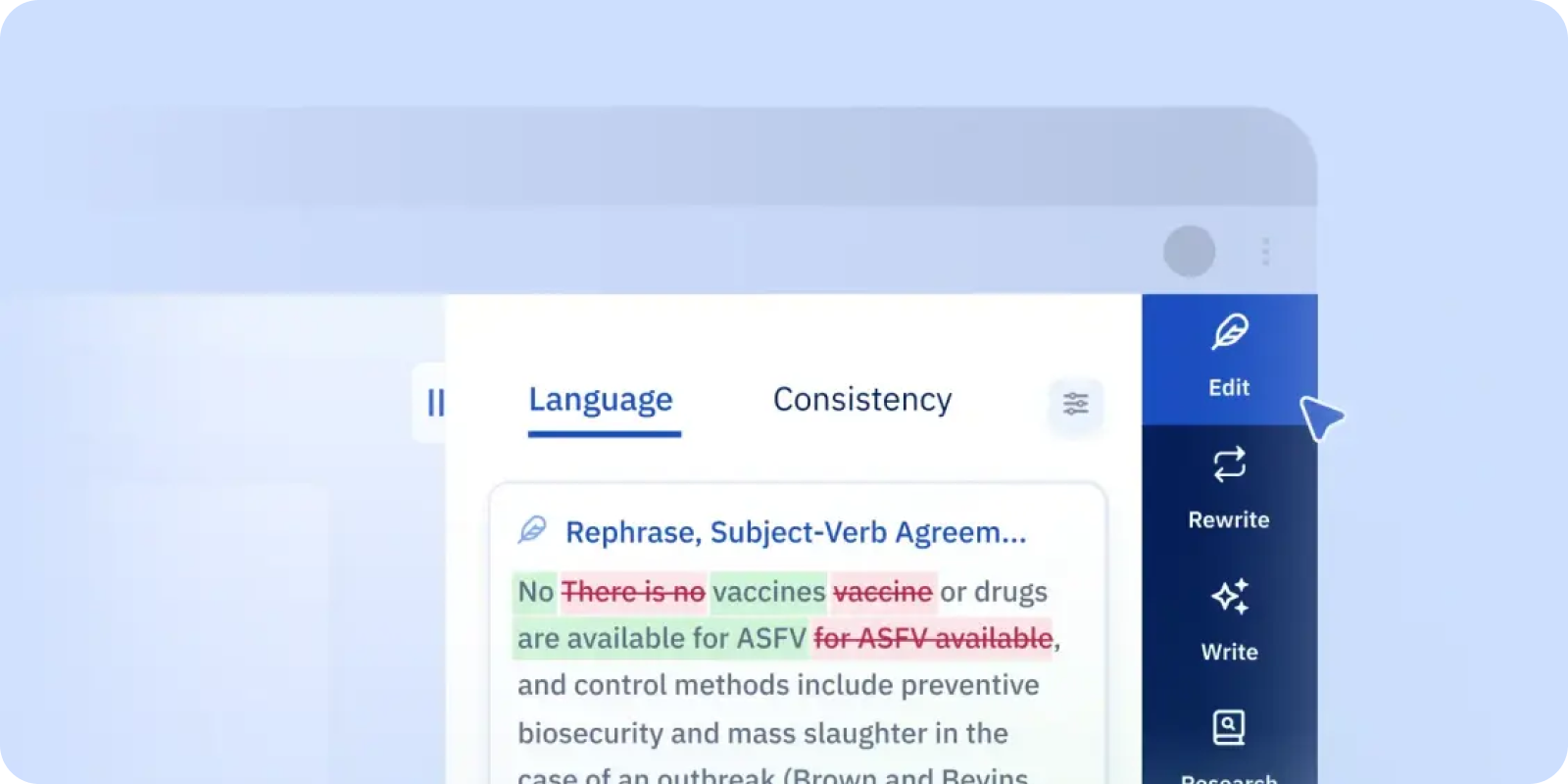
But the earlier onboarding treated most users similarly. This created friction because users had to figure out the platform before reaching the thing they actually wanted to do. The challenge was reducing the gap between user intent and product value.
The Problem
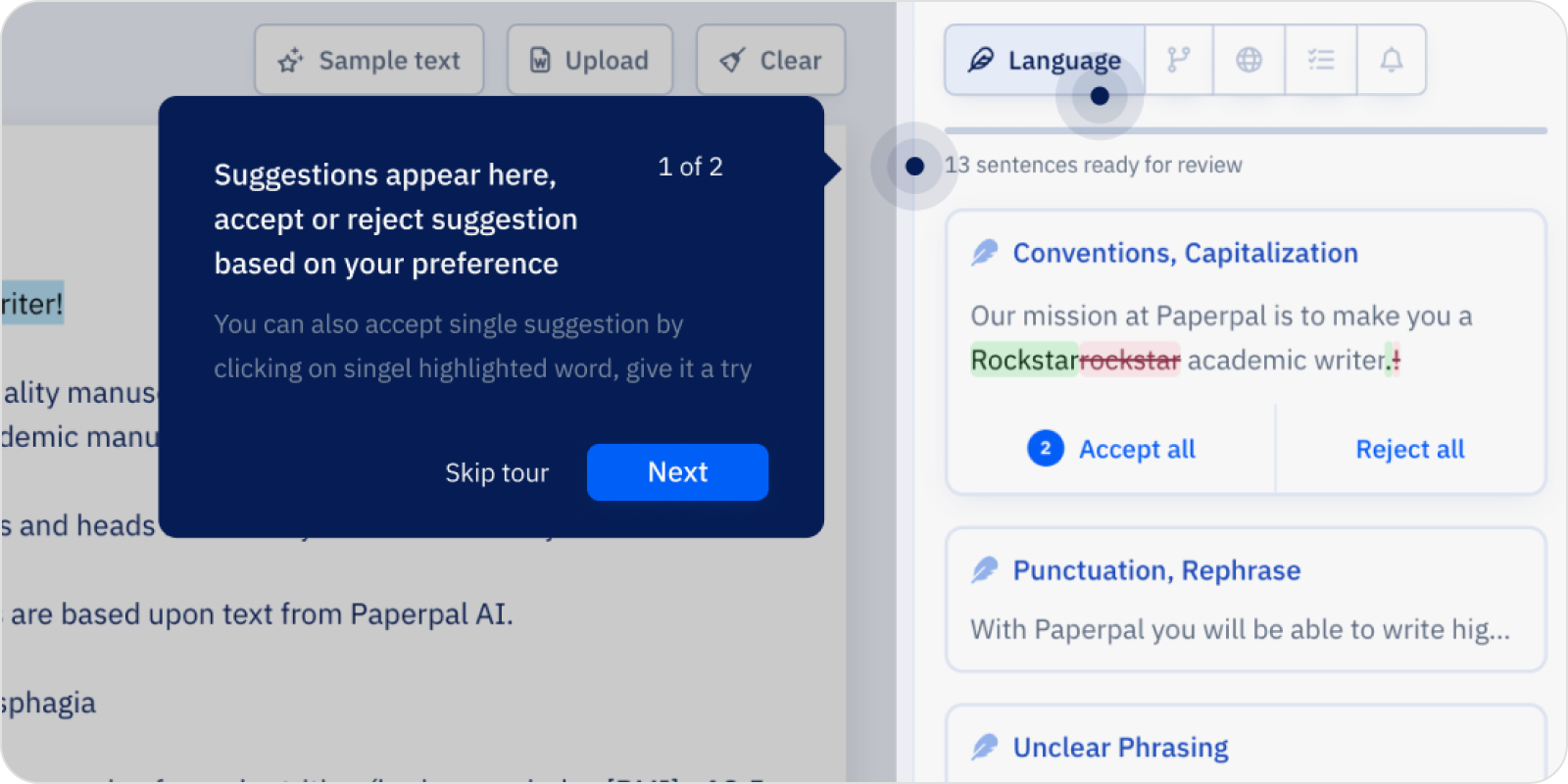
The legacy onboarding forced users through a linear feature tour before they could do real work:
Walkthrough completion sat below 25%. Users arrived with a specific task in mind — the forced tour created friction before they could reach any real value.
This one-size-fits-all approach created drop-off before users ever discovered Paperpal's real utility.
Understanding User Intent
While reviewing onboarding and activation funnels through Clevertap, we noticed users were entering the product with very different behaviors.
Analytics revealed two distinct user archetypes entering the product:
- Intent A: Action-Oriented User — Skips tutorials, goes straight to task, explores independently once value is clear.
- Intent B: Guided Learner — Needs structured first steps and sample content before committing to the platform.
Session recordings and funnel analysis confirmed this split across mobile and desktop cohorts.
Key data points that shaped our approach:
- ~60–70% of users bypassed the walkthrough and went straight to their primary task
- Guided users with structured entry showed noticeably stronger activation and conversion
- Mobile users dropped 2× faster when more than 3 decisions were introduced at signup
Our solution had to dynamically serve both archetypes — without splitting the codebase.
The answer: capture intent at signup. Route directly to value.
The Approach
We redesigned onboarding around intent detection.
Instead of showing the same experience to every user, the onboarding started identifying:
- who the user is
- what they study
- what they want to do immediately
The flow collected simple inputs like:
- academic role
- field of study
- immediate task intent
Based on these inputs, users were routed toward more relevant workflows instead of navigating the platform on their own.
The goal was simple: reduce the time between signup and meaningful action.
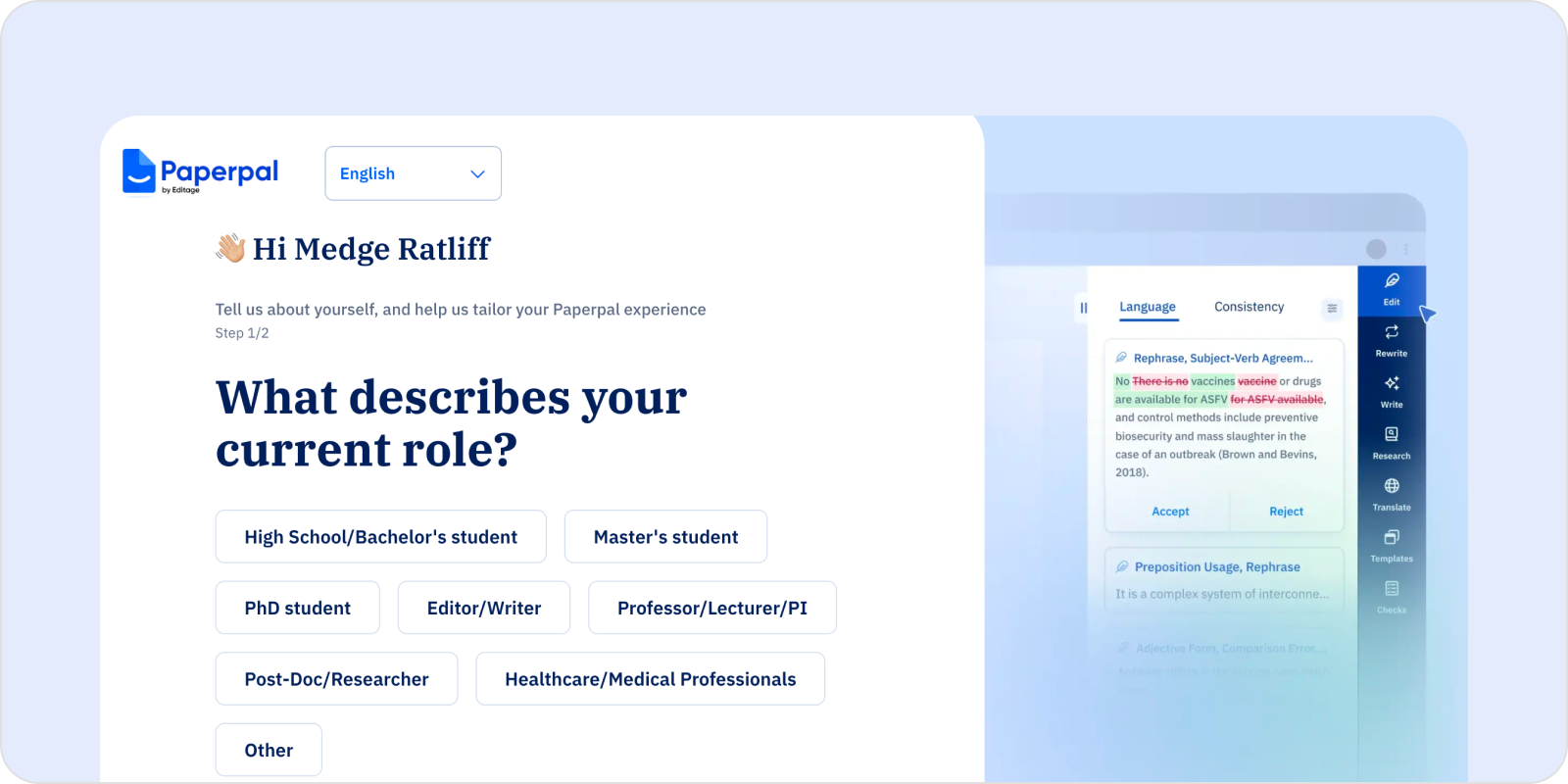
Why it works: Routing by intent — not a generic dashboard — means users reach relevant features immediately. This eliminated the "lost at login" drop-off before any value is discovered.
Metric Impact: Activation moved 8–12% in initial usability tests. Implemented as a lightweight routing layer at signup — zero added latency to core product workflows.
Intent-Based Entry Points
To reduce decision fatigue and help users start faster, we introduced 4 clear onboarding paths based on common user goals.
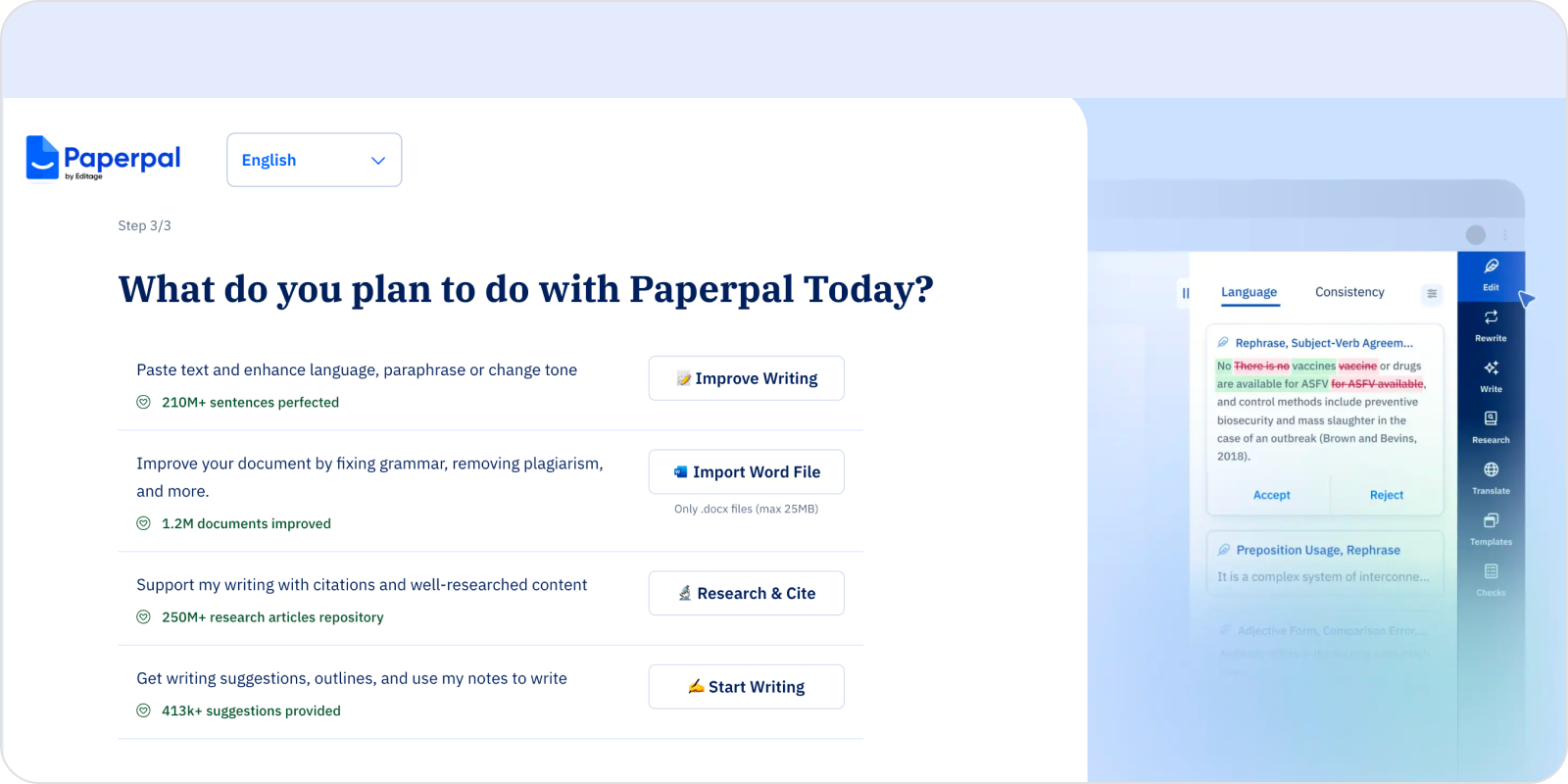
Improve Writing
For users wanting quick grammar corrections and writing improvements.
Import Word File
For users wanting deeper document-level review and editing.
Research & Cite
For users focused on citations and academic references.
Start Writing
For users wanting AI-assisted writing support.
Instead of forcing users to explore multiple areas after signup, onboarding guided them toward a likely starting point immediately.
The Impact: Activation Up 8–12%
Users don't want onboarding — they want value. Walkthrough completion sat below 25%. When we rebuilt around user intent, activation moved 8–12% positive across key entry-point flows.
While reviewing onboarding behavior through Mixpanel and Clevertap, we noticed:
- ~60–70% of users bypassed the tour and went straight to their primary task
- Walkthrough completion: <25% — users skipped directly to action
- Multi-workflow users showed 2× stronger activation vs. single-workflow cohorts
The pivot: stop teaching the platform. Start routing users directly to value.
Instead of educating users about the interface, we focused on helping users start faster and discover value contextually during the workflow.
Early directional metrics after intent-based onboarding shipped:
- 8–12% positive lift in activation across intent-based entry-point flows
- Intent-routed users explored adjacent features ~15% more vs. control journeys
- Contextual onboarding outperformed static walkthroughs in all early engagement metrics
- Users reaching relevant workflows faster showed healthier repeat interaction signals in first-session data
- Engineering note: Intent-segmentation was implemented as a lightweight routing layer at signup — adding zero latency to core product workflows, with no codebase split required.
At the same time, one challenge still remained. A large number of users were still completing a single task and leaving without building deeper product habits or exploring adjacent workflows. This exposed a larger retention and engagement problem beyond onboarding itself.
The next phase of exploration became: how do we move users from one-time usage to repeat engagement and stronger product adoption? That eventually led to a broader focus on retention, cross-feature discovery, and monetization journeys explored in the next case study.

