Beyond the First Interaction
Overview
After improving onboarding and first-time activation, another pattern started becoming visible inside Paperpal. Many users were successfully completing their first task, but a large portion never returned or explored beyond a single workflow.
Some users:
…and then disappeared.
The challenge was no longer just activation. It became:
how do we help users discover broader product value and build stronger repeat usage habits?
The Problem
Product data showed that a large portion of users interacted with only one feature during their early lifecycle.
While onboarding improvements helped users start faster, many still viewed Paperpal as a single-use utility instead of an ongoing writing workspace.
This created a retention gap between:
users completing one successful action
Vsusers building ongoing engagement with the product
Understanding User Behavior
Using Clevertap and funnel analysis, we started studying how users behaved after their first successful interaction.
A few patterns stood out:
- users engaging across multiple workflows showed healthier retention trends
- document-based workflows created stronger repeat usage compared to isolated quick actions
- users often needed contextual nudges to discover adjacent capabilities
- some features had strong value individually, but weak discoverability inside the larger ecosystem
For example: users interacting with grammar along with document checks and AI detection showed stronger conversion and repeat engagement patterns compared to users staying within a single workflow.
This indicated that breadth of engagement was closely tied to retention quality.
The Approach
Instead of pushing users toward isolated features, we started thinking about connected workflows.
The focus shifted toward:
- improving feature discoverability
- reducing dead-end experiences
- encouraging adjacent workflow exploration
- helping users continue naturally after task completion
The idea was not forcing engagement.
It was making the next useful action feel obvious.
Contextual feature discovery
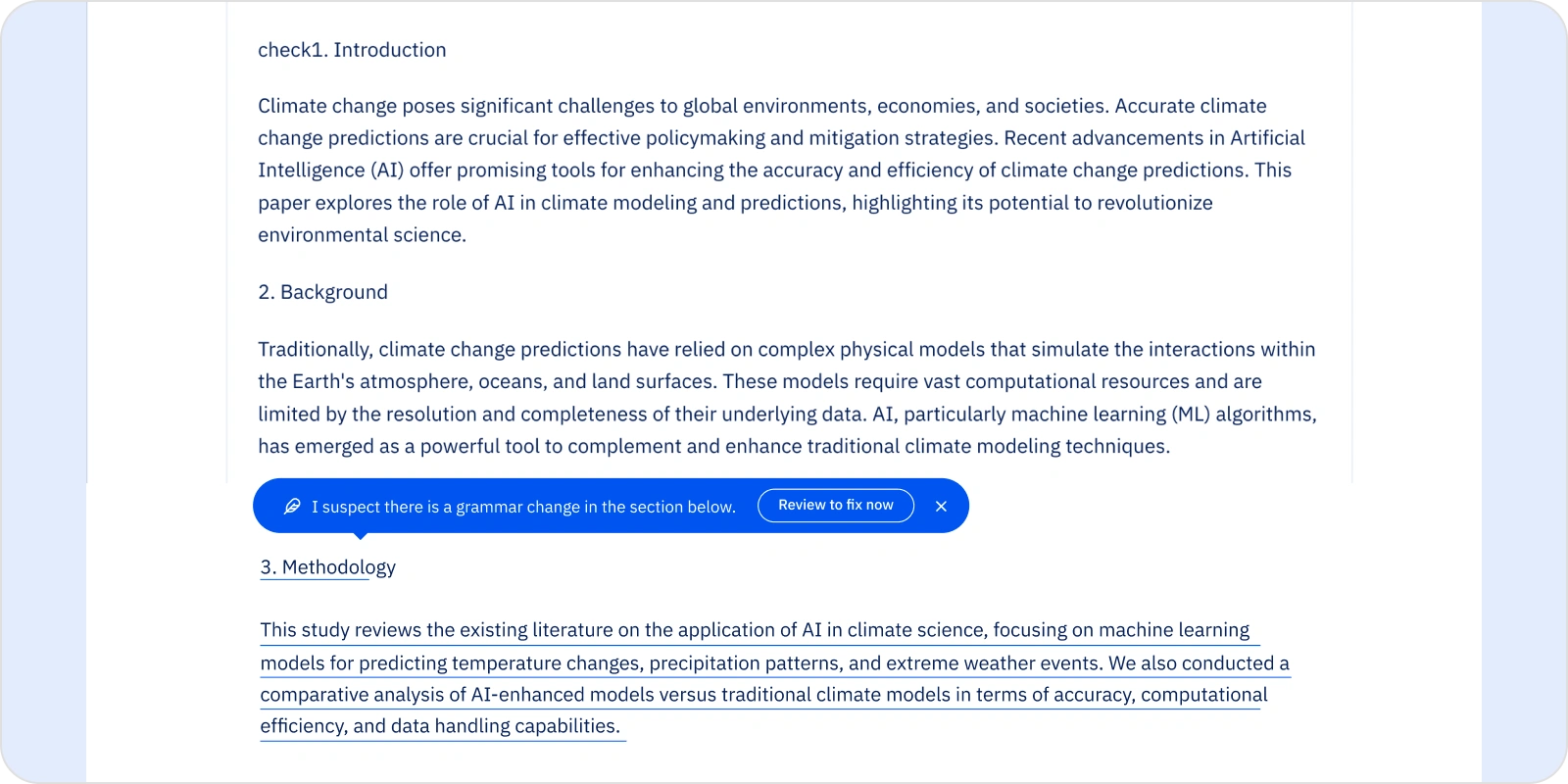
Features started appearing more contextually inside workflows instead of existing as isolated destinations.
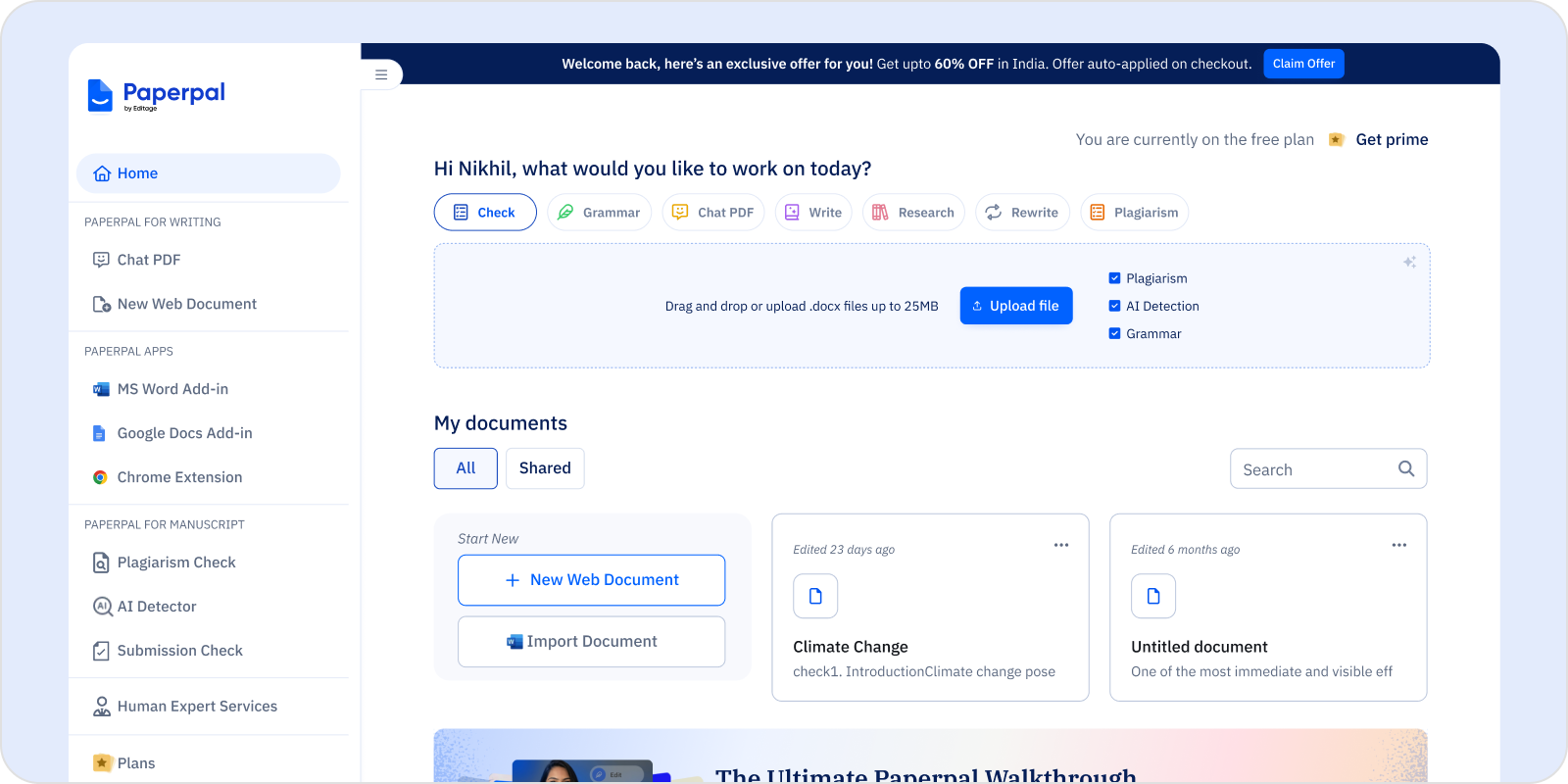
grammar users were nudged toward rewrite flows
AI detection users were introduced to document-level checks
document workflows surfaced additional research and editing capabilities
This helped users discover more value without interrupting their task.
Reducing dead-end journeys
Earlier, many workflows ended immediately after task completion.
We started introducing softer continuation paths:
- next-step suggestions
- related workflow prompts
- contextual recommendations
- progressive engagement surfaces
At the same time, one challenge still remained.
Findings & Learnings
The changes showed gradual improvements in engagement quality, but also exposed how difficult retention can be in utility-driven products.
Some positive signals:
- users exposed to connected workflows explored adjacent features more frequently
- cross-feature engagement improved across key journeys
- document-centric workflows showed healthier repeat interaction behavior
- users engaging across multiple workflows continued showing better retention and FTP trends
One important learning:
More features alone do not improve retention.
Some directional improvements observed:
- users exposed to connected workflows explored adjacent features ~15–20% more frequently
- repeat interaction trends improved for document-centric journeys
- contextual feature nudges showed healthier engagement compared to static discovery surfaces
- cross-feature users continued showing stronger activation and FTP behavior compared to single-workflow users
While the improvements were encouraging, long-term retention still varied significantly across different cohorts and user intents.
This revealed a larger challenge: helping users not just discover features, but continuously return and build stronger product habits over time.

